Bacterial Endotoxin Testing (LAL Test)
Ensure patient safety by eliminating pyrogenic risks. Our LAL testing services provide rapid, highly sensitive detection of bacterial endotoxins to guarantee your medical devices and injectables are safe for clinical use.
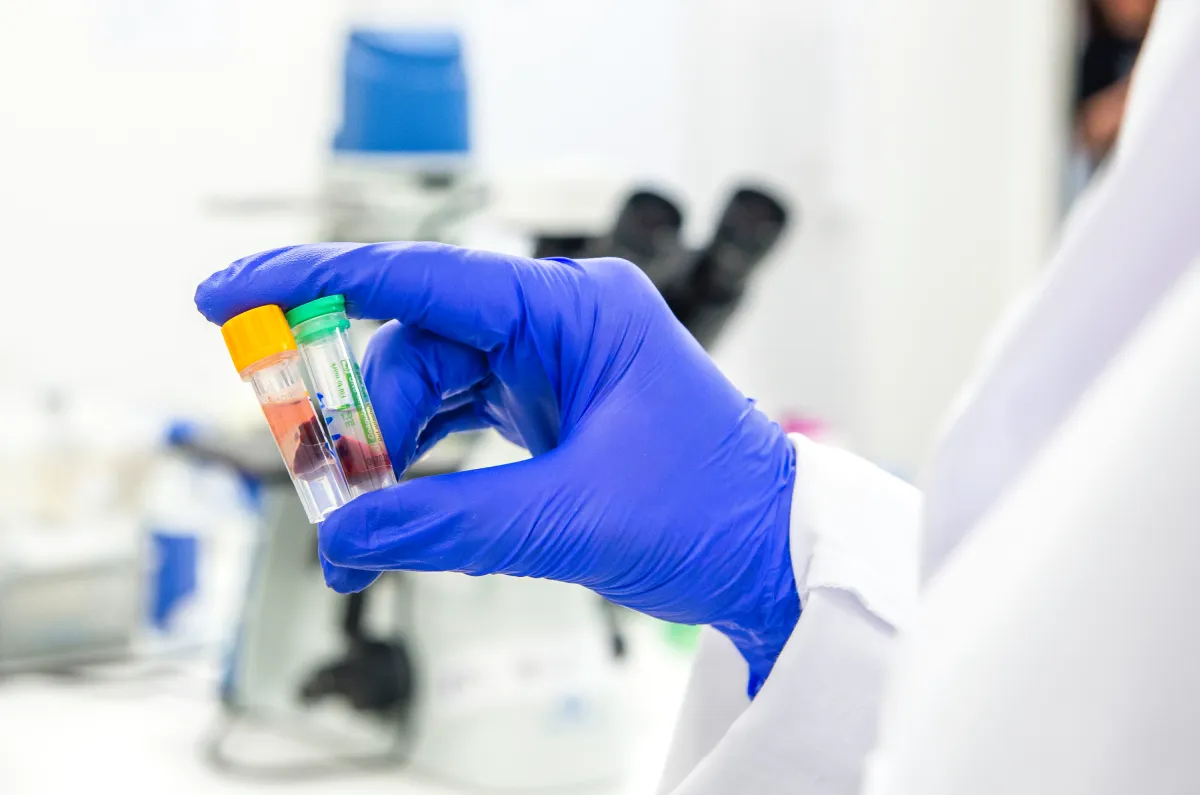
Bacterial endotoxins, also known as pyrogens, are lipopolysaccharides (LPS) found in the outer membrane of Gram-negative bacteria. Even if a device is sterile (free of living microorganisms), dead bacterial cells can leave behind endotoxins that trigger severe inflammatory responses, high fever, or even septic shock when they enter the human body. At EBI, we provide industry-standard LAL (Limulus Amebocyte Lysate) testing to ensure your products meet strict pyrogen-limit requirements.
Why Endotoxin Testing is Critical
Endotoxin testing is a mandatory safety release requirement for:
- Medical Devices: Specifically those with blood contact, cerebrospinal fluid contact, or those labeled as „non-pyrogenic.”
- Parenteral Drugs: Any injectable pharmaceutical or intravenous fluid.
- Raw Materials & Water: Monitoring the quality of Water for Injection (WFI) and raw components used in manufacturing.
- Regulatory Compliance: Essential for FDA 510(k) submissions, CE marking under MDR, and pharmacopeial compliance (USP, Ph. Eur., JP).
Our Testing Methodologies
EBI utilizes the Limulus Amebocyte Lysate (LAL) method, which is the most sensitive and recognized technique for endotoxin detection.
Kinetic Chromogenic Method
This is a quantitative method that measures the color development over time when endotoxins react with the LAL reagent.
- Best for: Large batches, complex samples, and products requiring precise quantification.
- Advantage: High sensitivity and a wide range of detection.
The Validation Process: Inhibition & Enhancement
Before routine testing, we must perform a Method Validation (Inhibition/Enhancement study) for every unique product. This ensures that the material of your device or the chemistry of your drug does not interfere with the LAL reaction, which could lead to false-negative or false-positive results.
- Extraction: For medical devices, we perform a controlled rinse (extraction) using pyrogen-free water.
- Inoculation: We „spike” samples with a known amount of endotoxin.
- Verification: We confirm that our system can recover the spiked endotoxin within 50% to 200% of the expected value, as required by USP <85>.
Sample Requirements & Timeline
- Turnaround Time: Typically 1–2 weeks (including validation).
- Sample Quantity: Usually 3 to 10 samples from a single production lot, depending on the batch size and regulatory requirements. For validation purposes, the same quantity of samples must be provided from three separate archival lots (as per regulatory standards).
- Packaging: Samples must be submitted in their final packaging or pyrogen-free containers to avoid external contamination.
Standards & Compliance
EBI operates in full alignment with global microbiological and biocompatibility standards:
- USP <85>: Bacterial Endotoxins Test.
- ANSI/AAMI ST72: Bacterial endotoxins — Test methods, routine monitoring, and alternatives to batch testing.
- Ph. Eur. 2.6.14: Bacterial Endotoxins.
- ISO 10993-11: Biological evaluation of medical devices — Part 11: Tests for systemic toxicity (including pyrogenicity and acceptance criteria).
- ISO 11737-3:2023: Sterilization of health care products — Microbiological methods — Part 3: Bacterial endotoxin testing.
- ISO 20977: (Under development) Related to medical device pyrogenicity.
How We Work

Discovery & Insight
We begin with an in-depth consultation to understand your needs, challenges, and objectives. This helps us define the right strategy and scientific approach for your project.
Design & Development
Our experts translate your vision into actionable plans — combining innovative research, data, and technology to build precise and reliable solutions.
Delivery & Support
We implement the solution with full transparency and ongoing communication. After delivery, we stay involved — supporting you with optimization, updates, and future improvements.
FAQ
What is the difference between Sterility Testing and Endotoxin Testing?
Sterility testing (USP <71>) confirms the absence of living microorganisms. Endotoxin testing (USP <85>) detects the toxic remnants of dead Gram-negative bacteria. A product can be sterile but still contain dangerous levels of endotoxins.
What is a „Pyrogen”?
A pyrogen is any substance that induces a fever. While endotoxins from bacteria are the most common pyrogens, there are also „non-endotoxin pyrogens” (like chemicals or fungal components). For those, we recommend the Rabbit Pyrogen Test or Monocyte Activation Test (MAT).
Can all materials be accelerated?
Standard limits are usually 20 EU/device (Endotoxin Units) for general medical devices and a much stricter 2.15 EU/device for devices in contact with cerebrospinal fluid (CSF).
What is the difference between Sterility Testing and Endotoxin Testing?
Sterility testing (USP <71>) confirms the absence of living microorganisms. Endotoxin testing (USP <85>) detects the toxic remnants of dead Gram-negative bacteria. A product can be sterile but still contain dangerous levels of endotoxins.
What is a "Pyrogen"?
A pyrogen is any substance that induces a fever. While endotoxins from bacteria are the most common pyrogens, there are also „non-endotoxin pyrogens” (like chemicals or fungal components). For those, we recommend the Rabbit Pyrogen Test or Monocyte Activation Test (MAT).
What are the limits for endotoxins in medical devices?
Standard limits are usually 20 EU/device (Endotoxin Units) for general medical devices and a much stricter 2.15 EU/device for devices in contact with cerebrospinal fluid (CSF).
Contact with us
We’re open to collaboration and research partnerships. Fill out the form — our team will respond as soon as possible.
Location:
Europejski Instytut Biomedyczny sp. z o.o.
ul. Bartycka 63A lok. 6, 00-716 Warszawa
Mail:
contact@ebi.bio
Phone:
+48 22 780 06 32
Get in touch