Total Organic Carbon (TOC) Analysis: Aqueous Extract Evaluation
Total Organic Carbon (TOC) analysis is a highly sensitive and non-specific analytical method used to determine the total amount of carbon bound in organic compounds.In the medical device industry, TOC is a vital parameter for assessing the overall cleanliness of a device and the presence of organic residues that may have migrated from materials during extraction.

At EBI, we perform TOC testing to provide a comprehensive overview of the organic load in aqueous extracts, ensuring your device meets the purity requirements for global regulatory approval.
The Importance of TOC in Chemical Characterization
As part of the chemical characterization process (ISO 10993-18), TOC acts as an essential screening tool. While methods like GC-MS or LC-MS identify specific molecules, TOC provides a quantitative measure of the total organic content.
This analysis is particularly critical for:
- Cleaning Validation: Verifying that manufacturing residues, such as detergents, lubricants, and processing aids, have been effectively removed.
- Material Purity Assessment: Detecting any carbon-based leachables that migrate into polar environments.
- Safety Screening: Serving as a „worst-case” indicator—if TOC levels are exceptionally low, it further validates the biological safety of the device.
Methodology and Analytical Process
Our TOC analysis follows a rigorous oxidation and detection process to ensure the highest accuracy for medical device extracts:
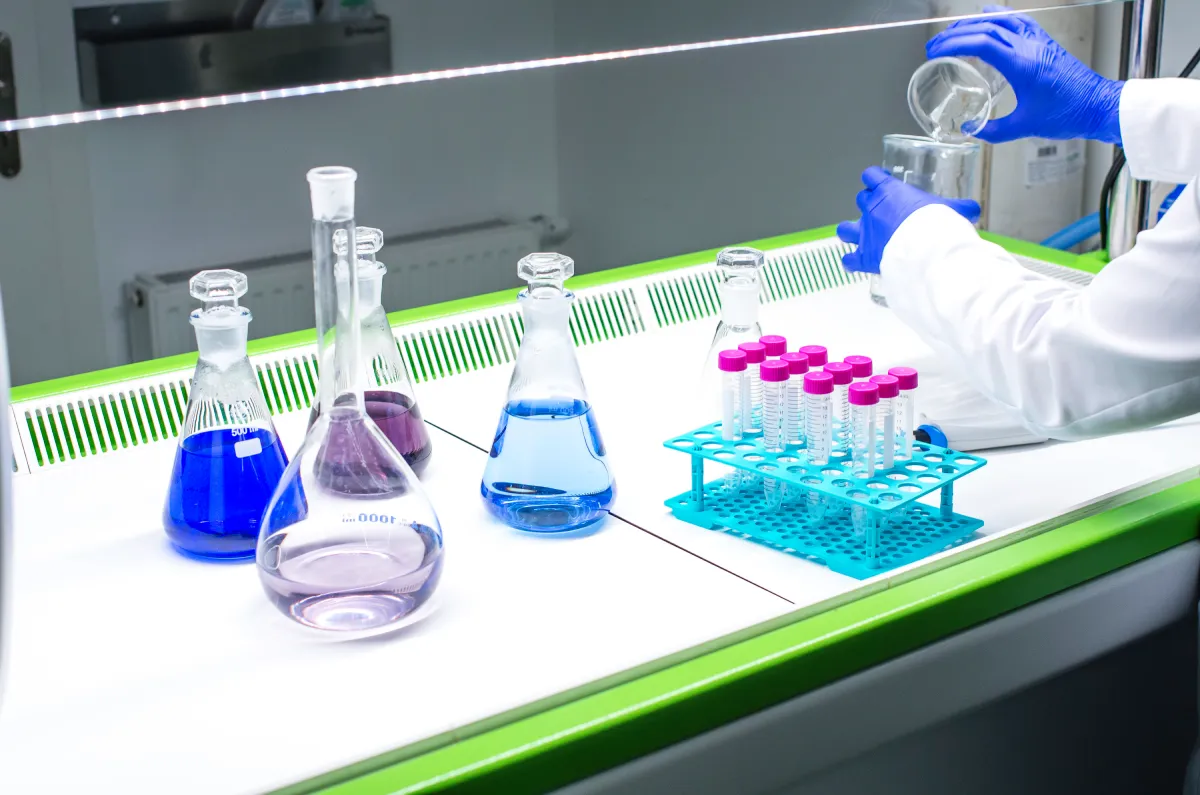
- Aqueous Extraction: The solid medical device is extracted in a polar vehicle (purified water) according to the guidelines of ISO 10993-12.
- Oxidation and Acidification: The analytical process involves a sequence of acidification and oxidation reactions. This process converts all organic compounds present in the extract into carbon dioxide (CO₂).
- Detection: The resulting CO₂ is measured with precision, and the total organic carbon concentration is calculated.
- Vehicle Focus: This test is specifically designed for polar vehicles, making it ideal for devices that come into contact with blood, mucosal membranes, or other aqueous body fluids.
Sample Requirements and Turnaround Time
TOC analysis requires a significant surface area to ensure that the organic carbon concentration remains within the detectable range of the instrument.
- Material Dimensions: 300 cm² (thickness < 0.5 mm) or 150 cm² (thickness ≥ 0.5 mm).
- Weight/Volume: 10 grams for solid items or 50 ml for liquid solutions.
- Vehicle: Polar (Aqueous).
- Minimum Quantity: At least 1 test item.
- Standard Turnaround Time: 8 weeks.
Compliance with Global Standards
EBI conducts TOC testing in full alignment with international pharmacopeial and biological safety standards:
- USP <643>: Total Organic Carbon (standard for pharmaceutical and medical device water/extracts).
- ISO 10993-18: Chemical characterization of medical device materials within a risk management process.
- ISO 10993-12: Sample preparation and reference materials.
How We Work

Discovery & Insight
We begin with an in-depth consultation to understand your needs, challenges, and objectives. This helps us define the right strategy and scientific approach for your project.
Design & Development
Our experts translate your vision into actionable plans — combining innovative research, data, and technology to build precise and reliable solutions.
Delivery & Support
We implement the solution with full transparency and ongoing communication. After delivery, we stay involved — supporting you with optimization, updates, and future improvements.
FAQ: Total Organic Carbon (TOC)
Why is TOC analysis limited to polar vehicles?
TOC is measured in an aqueous (water-based) environment. Because the process involves oxidation and acidification of the liquid extract, the vehicle must be polar to allow for the effective detection of dissolved organic carbon.
What is the difference between TOC and other chromatographic tests?
Chromatographic tests (like GC-MS) identify and quantify individual chemical substances. TOC measures the sum of all organic carbon in the sample without identifying specific molecules. It is a faster, highly sensitive way to monitor overall contamination levels.
Does a high TOC result mean my device is toxic?
Not necessarily. A high TOC result indicates a higher level of organic substances in the extract. This result serves as a signal to investigate further—typically by performing a Toxicological Risk Assessment or targeted LC-MS/GC-MS analysis to identify exactly what those organic compounds are.
Why is TOC analysis limited to polar vehicles?
TOC is measured in an aqueous (water-based) environment. Because the process involves oxidation and acidification of the liquid extract, the vehicle must be polar to allow for the effective detection of dissolved organic carbon.
What is the difference between TOC and other chromatographic tests?
Chromatographic tests (like GC-MS) identify and quantify individual chemical substances. TOC measures the sum of all organic carbon in the sample without identifying specific molecules. It is a faster, highly sensitive way to monitor overall contamination levels.
Does a high TOC result mean my device is toxic?
Not necessarily. A high TOC result indicates a higher level of organic substances in the extract. This result serves as a signal to investigate further—typically by performing a Toxicological Risk Assessment or targeted LC-MS/GC-MS analysis to identify exactly what those organic compounds are.
Contact with us
We’re open to collaboration and research partnerships. Fill out the form — our team will respond as soon as possible.
Location:
Europejski Instytut Biomedyczny sp. z o.o.
ul. Bartycka 63A lok. 6, 00-716 Warszawa
Mail:
contact@ebi.bio
Phone:
+48 22 780 06 32
Get in touch